
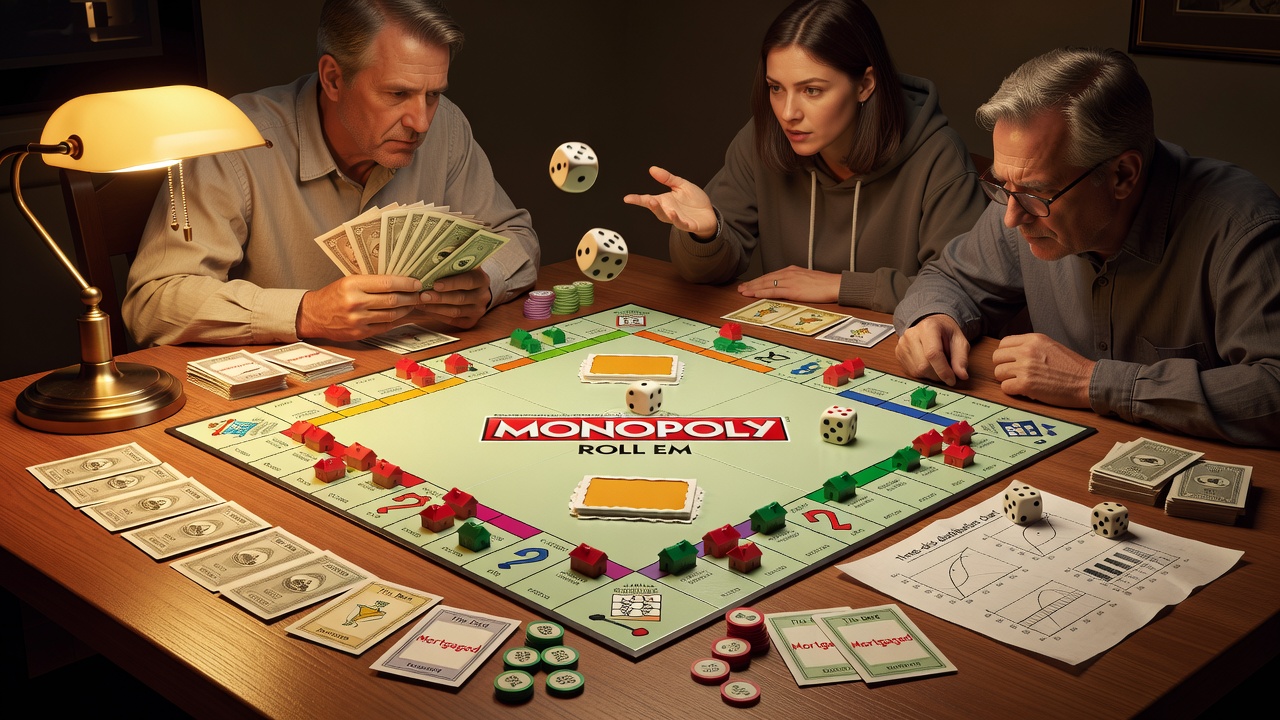
Three dice change everything. Standard Monopoly runs on two cubes and a predictable bell curve centered on seven, but Roll Em variants introduce a third die and a different rhythm of risk. That single addition shifts probability tables, alters how fast players circle the board, and forces a rethink of tactics that worked fine in the classic version. Players who treat Roll Em like ordinary Monopoly usually lose to those who understand the math underneath the extra die.
The difference shows up almost immediately in how properties get valued and how aggressively a player should build. A well-built monopoly roll em strategy treats the third die as a tempo tool - it accelerates movement around the board, which means rent gets collected and paid more often per hour of play. If you want a structured way to practice these mechanics before testing them against friends or in a live setting, monopoly roll em strategy resources like monopoly roll em strategy walk through the rule variations step by step. Once you grasp how the third die compresses the game's timeline, the rest of the decision-making - property selection, trade timing, cash reserves - starts to make a lot more sense.
This piece breaks down the mechanics, the math, and the practical decisions that separate players who stumble through Roll Em from those who consistently finish on top. Expect concrete reasoning, not vague encouragement to "play smart."
Understanding the Roll Em Format
Roll Em modifies the core Monopoly engine by adding a third die, usually reserved for special actions or bonus movement depending on the ruleset in play. This isn't a cosmetic tweak. It restructures the probability distribution players have relied on for decades and changes the pace at which the board gets traversed.
What Makes Roll Em Different from Classic Monopoly
In standard Monopoly, the sum of two six-sided dice produces a triangular distribution - seven is the most common roll, while two and twelve are rare. Add a third die and the distribution shifts again, generally increasing average movement per turn and making certain squares statistically busier than others. This changes how valuable specific properties become, since landing frequency drives rent income more than the printed rent value alone.
The Role of the Third Die
Depending on the specific edition, the third die might trigger bonus cash, extra movement, or special event squares. Its function determines whether the format rewards aggressive board control or cautious cash accumulation. Players need to identify, in the first few turns, whether the third die is working as an accelerant for movement or as an independent scoring mechanism - the answer changes which properties matter most.
How Turn Speed Affects Strategy
Faster movement means faster property acquisition, but it also means faster rent exposure. A monopoly roll em game plan built around slow, patient accumulation - the kind that works in a four-hour classic game - often collapses under the compressed pace of Roll Em, where the board gets lapped more frequently and cash reserves drain quicker.
Core Monopoly Roll Em Strategy Principles
Good strategy in this format rests on three pillars: liquidity, positioning, and timing. Ignore any one of them and the other two won't compensate.
Prioritizing Liquidity Over Property Count
Owning eight properties means nothing if you can't cover a rent demand and end up mortgaging half your board on your opponent's next turn. Because Roll Em increases the frequency of rent-triggering rolls, cash on hand matters more than raw property count. Keep a reserve equal to at least one full lap's worth of average rent exposure.
Positional Value in a Faster Game
Properties near frequently-landed zones gain outsized value in Roll Em because the third die shifts landing probabilities away from the classic distribution. Orange and light-purple properties, which already benefit from jail-adjacent traffic in standard Monopoly, often become even more lucrative here.
Timing Your Building Phase
Building houses and hotels too early starves your cash reserve during the volatile opening turns. Building too late means missing rent income during the format's fastest-moving middle stretch. The sweet spot is usually right after you've secured a color set and confirmed at least two rounds of stable income.
- Keep liquid cash equal to one lap's average rent liability
- Target high-traffic properties before chasing color-set completion
- Delay heavy building until income stability is confirmed
Monopoly Roll Em Dice Tactics
Dice tactics in Roll Em go beyond hoping for good numbers - they involve reading probability shifts and adjusting decisions turn by turn.
Reading the Probability Curve with Three Dice
Adding a die flattens some of the extremity of outcomes while increasing the average roll total. This means extreme low rolls (staying close to your current position) become rarer, and mid-to-high movement becomes the norm. Plan property purchases assuming you'll move further per turn than classic Monopoly instincts suggest.
Adjusting Purchase Decisions Based on Roll Frequency
Since the third die increases how often players pass through mid-board zones, properties in that range deserve earlier investment. Waiting for "the perfect roll" to land exactly on a coveted property is a weaker approach here than buying opportunistically whenever cash allows.
Using Doubles and Bonus Rolls Effectively
Many Roll Em rulesets grant extra turns or bonus actions on doubles or matching values across three dice. Recognizing when these bonus mechanics trigger - and having a plan for what to do with the extra action - separates players who capitalize on luck from those who waste it on indecision.
Building a Winning Monopoly Roll Em Game Plan
A game plan needs distinct phases. Treating the entire match as one continuous strategy ignores how drastically the board's dynamics shift from opening to endgame.
Opening Phase: Establishing Position
The first several turns should focus on acquiring properties across multiple color groups rather than committing hard to one. This spreads risk and gives you leverage in trades once you identify which colors your opponents are missing.
Mid-Game Phase: Consolidating Monopolies
Once you have a sense of which color sets are contested and which are open, pivot toward completing monopolies through trades. This phase is where the best strategy for roll em usually gets decided - players who trade aggressively and accurately outpace those who hoard single properties.
End-Game Phase: Maximizing Rent Pressure
In the closing stretch, the goal shifts to maximizing rent extraction from opponents low on cash. Build hotels on high-traffic properties and force decisions that drain your rivals' liquidity faster than they can recover it.
Best Strategy for Roll Em: Advanced Tactics
Beyond fundamentals, a handful of advanced tactics consistently separate strong players from average ones.
Trading Aggressively Early
Early trades, even ones that look slightly unfavorable on paper, often set up monopoly completions two or three turns ahead of opponents who wait for "perfect" trades. Speed of completion matters more than trade equity in a fast-paced format.
Managing Risk During High-Variance Rolls
Three dice introduce more variance in extreme outcomes even as they shift the average upward. Keep a mental buffer for worst-case rent scenarios, especially once hotels start appearing on the board.
Exploiting Opponent Cash Shortages
Watch for opponents mortgaging properties or hesitating on purchases - both are signs of cash pressure. This is the moment to propose trades that extract properties at a discount or to press rent demands that force liquidation.
How to Win Monopoly Roll Em: Putting It All Together
Winning consistently means integrating dice awareness, positional judgment, and cash discipline into a single coherent approach rather than treating them as separate skills.
Combining Dice Awareness with Positional Play
Knowing the probability shifts from the third die only helps if you translate that knowledge into property targeting. Track which squares are getting hit most often during the actual game rather than relying purely on theoretical averages.
Avoiding Common Mistakes That Cost the Game
Overbuilding too early, refusing reasonable trades, and underestimating rent exposure from faster board laps are the three most common ways players lose in this format. Each mistake stems from applying classic Monopoly instincts without adjusting for the third die's effect on pace.
Final Checklist Before Your Next Match
- Confirm the specific third-die rule variant before play begins
- Set a minimum cash reserve target for each game phase
- Prioritize trades that complete monopolies quickly over trades that maximize value
- Reassess property targets based on actual roll patterns during the game
Question: Does the third die always add extra movement in Roll Em?
Not always. Some editions use the third die purely for bonus cash or special actions rather than movement, so check the specific rules before the game starts. Misreading this can throw off your entire early-game property targeting.
Question: How much cash should I keep in reserve during Roll Em?
A reasonable benchmark is enough to cover one full lap's worth of average rent exposure from your opponents' current holdings. This buffer protects you from forced mortgaging during the format's faster-paced rent cycles.
Question: Is it better to focus on one monopoly early or spread purchases across colors?
Spreading purchases early gives you trading leverage once you identify which color groups opponents are missing. Locking into one color too early limits your negotiating power during the mid-game trading phase.
Question: Do doubles or matching rolls matter more in Roll Em than in classic Monopoly?
Yes, because many Roll Em rulesets attach bonus actions or extra turns to matching values across three dice rather than just two. Having a plan for how to use bonus turns before they happen prevents wasted opportunities.
Question: What's the biggest mistake new players make in this format?
Building houses and hotels too aggressively in the opening phase, which drains cash reserves right when rent exposure from faster board laps starts increasing. Patience during the first several turns pays off more than early aggressive building.
Question: Can a strong dice strategy overcome bad property positioning?
Dice awareness helps you adapt, but it can't fully compensate for owning properties in low-traffic zones. The strongest approach combines both - using probability knowledge to guide which properties you target in the first place.