
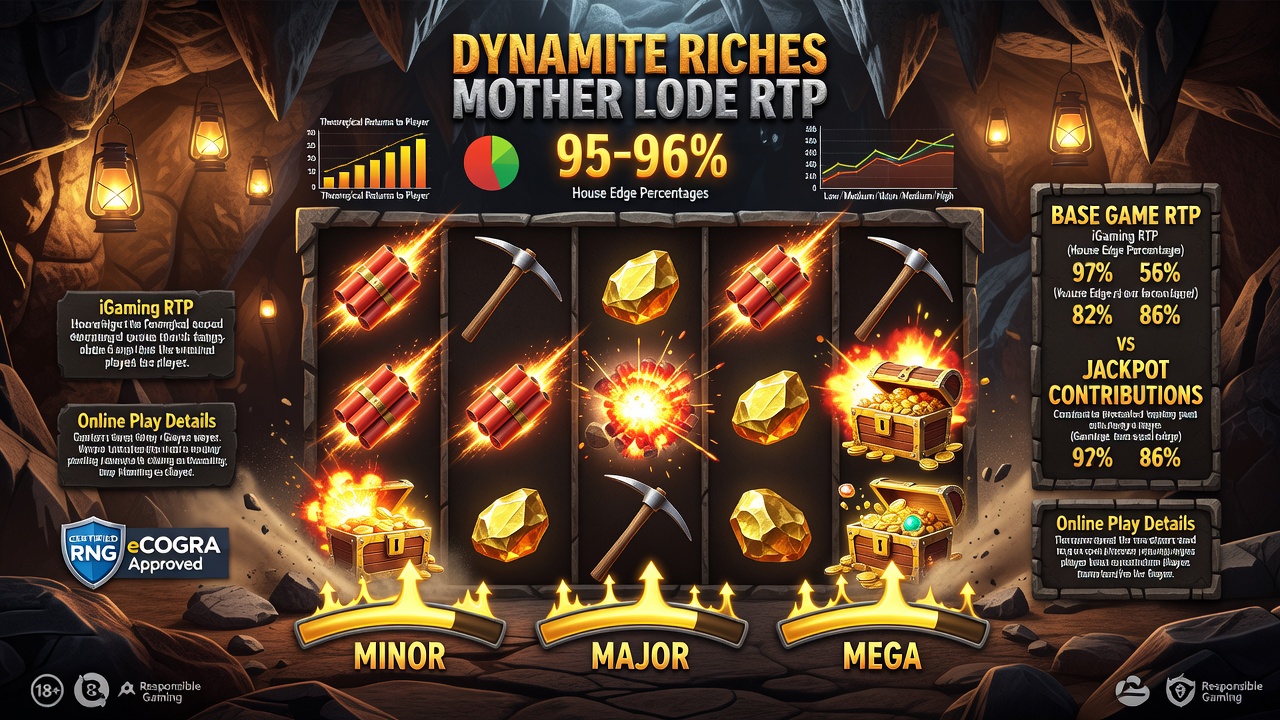
A single percentage point separates a slot that quietly drains a bankroll from one that gives players a fighting chance over the long run. That number is Return to Player, and for anyone weighing whether to spend real money on Dynamite Riches "The Mother Lode," it's the first thing worth checking before the reels ever start spinning. Most players never look past the flashy mining theme and the promise of a jackpot feature, yet the dynamite riches mother lode rtp figure tells a far more honest story about what this game actually delivers over thousands of spins.
This piece breaks down exactly what that RTP figure means, how it compares to other titles in the same category, and why the number alone doesn't guarantee anything on a single session. Anyone curious about the mechanics behind the game can find a detailed breakdown at dynamite riches the mother lode rtp, which lays out the technical specifications alongside the gameplay features. From there, the goal is to connect that raw percentage to real betting decisions - how much to wager, how long to play, and what kind of variance to expect along the way.
By the end, readers should understand not just the dynamite riches slot RTP as an isolated statistic, but how it fits into the broader picture of online slot game RTP standards, regulatory disclosure practices, and the practical math of casino play.
What RTP Actually Means for Slot Players
Return to Player is a theoretical percentage calculated over an enormous number of spins - typically millions, run through simulation software before a game ever reaches a live platform. It represents the average amount a slot pays back to players relative to total wagers placed. An RTP of 96% means that for every $100 wagered across the full lifetime of the game, the machine is designed to return $96 on average. The remaining $4 represents the house edge.
This is a statistical average, not a guarantee for any individual session. A player could sit down for twenty spins and walk away with double their stake, or lose everything in the same span. RTP smooths out over time; it says nothing about what happens in the next five minutes.
Theoretical vs. Actual Returns
The published RTP is a mathematical model, not a live tracker of what a specific machine has paid out that week. Casinos don't adjust individual games to hit a target number in real time. Instead, the random number generator produces outcomes independently on every spin, and the long-run average simply converges toward the theoretical figure as the sample size grows.
Why RTP Differs From Volatility
RTP and volatility answer different questions. RTP tells you how much money comes back over time. Volatility tells you how that money arrives - in small frequent wins or rare large ones. A slot can carry a high RTP and still feel punishing to play if its volatility is steep, because most sessions will produce losses punctuated by occasional big hits rather than steady, modest returns.
Dynamite Riches Mother Lode RTP: The Core Numbers
The mother lode RTP rate for this particular title sits within the range typically seen in mid-to-high volatility mining-themed slots, generally hovering in the mid-90s percentage bracket depending on the specific version and platform hosting the game. This places it competitively among comparable titles without positioning it as an outlier in either direction.
What makes this figure particularly relevant is the game's structure. Dynamite Riches "The Mother Lode" incorporates a progressive jackpot element layered on top of standard reel payouts, and the RTP calculation typically accounts for both components combined.
Base Game RTP vs. Jackpot Contribution
Progressive jackpot slots often split their RTP into two portions: the base game payouts and the jackpot pool contribution. A small percentage of every wager feeds into the jackpot, which means the base game RTP alone may read slightly lower than the combined figure advertised. Understanding this split matters because a player chasing frequent small wins experiences a different reality than one hoping to land the jackpot itself.
How Providers Certify and Publish This Rate
Licensed game studios submit their RTP calculations to independent testing labs before release. These labs verify the random number generator's fairness and confirm that the payout percentage matches what the developer claims. Regulatory bodies in most licensed jurisdictions require this certification before a slot can legally operate on real-money platforms.
- Independent labs test millions of simulated spins against the published RTP figure
- Regulators require public disclosure of RTP in licensed markets
- Jackpot contribution rates are usually disclosed separately from base RTP
Comparing Dynamite Riches Slot RTP to Industry Standards
Online slot game RTP figures generally range from the high 80s to the high 90s, with the majority of reputable titles landing between 94% and 97%. Anything below 92% is typically considered player-unfriendly by industry standards, while figures above 97% are relatively rare and often come with lower volatility to balance the house's risk.
Dynamite riches slot RTP falls comfortably within the competitive middle-to-upper range, making it neither the most generous nor the least favorable option among mining and treasure-themed slots currently available on major platforms.
Where This Title Ranks Among Similar Games
Compared to other progressive-jackpot slots with a similar thematic setup, this title's payout rate tracks closely with genre expectations. Games with a jackpot mechanic often trade a slightly lower base RTP for the appeal of a large potential payout, and this title follows that pattern rather than breaking from it.
Regional and Platform Variations
RTP figures aren't always identical across every casino that hosts a game. Operators sometimes license slightly different configurations of the same title, and some platforms allow game studios to offer multiple RTP versions for the same slot. It's worth confirming the specific RTP listed on the platform being used rather than assuming it matches every source.
iGaming RTP Standards and Regulatory Context
The broader iGaming industry operates under a patchwork of regulatory frameworks, and dynamite riches iGaming RTP disclosure depends heavily on which jurisdiction licenses the operator hosting the game. Markets with stricter oversight - including several regulated European territories - mandate that RTP figures be published directly within the game's information panel, accessible before a player ever places a bet.
Other jurisdictions apply lighter requirements, leaving disclosure practices more inconsistent. This is why checking the specific platform's licensing and terms matters as much as checking the RTP number itself.
Licensing Bodies and Their RTP Requirements
Regulators such as those overseeing major European gaming markets typically require operators to maintain minimum RTP thresholds and prohibit silent adjustments to a live game's payout structure without re-certification. This protects players from operators quietly tweaking a slot's math model after launch.
How to Verify RTP Before Playing
Most reputable platforms display RTP within the game's paytable or information icon, usually accessible with a single tap or click before spinning. If that figure isn't visible, checking the provider's official documentation or a licensed review resource is the more reliable path than relying on unverified third-party claims.
Practical Impact of RTP on Real Money Play
Knowing the mother lode RTP rate changes how a rational player approaches bankroll management. A game with a 95% RTP and high volatility calls for a different betting strategy than a low-volatility slot with the same percentage, even though the long-run math looks identical on paper.
Session length matters more than most players assume. Because RTP is a long-run average, short sessions carry far more variance than the published figure suggests. A player spinning fifty times might land well outside the expected range in either direction, while a player spinning five thousand times will see results trend closer to the theoretical rate.
Bankroll Strategy Based on RTP and Volatility
Pairing RTP awareness with a clear bankroll limit reduces the risk of chasing losses. Setting a fixed session budget before playing, and treating any winnings above that budget as a bonus rather than an expectation, keeps the math grounded in reality rather than optimism.
Common Misconceptions About RTP
A frequent misunderstanding is treating RTP as a promise that a machine "owes" a win after a losing streak. RNG-based slots have no memory of previous spins - each outcome is independent, and the theoretical RTP has no bearing on what happens in the next round specifically.
Where and How to Play Dynamite Riches Mother Lode Online
Choosing a licensed platform matters as much as understanding the RTP itself. A verified, regulated operator guarantees that the published payout figure has been independently tested and matches what's actually running on the servers.
Choosing a Licensed and Verified Platform
Before depositing, confirm the operator holds a valid gaming license from a recognized authority. This single step filters out unregulated sites where RTP claims can't be independently verified.
Demo Play vs. Real Money Sessions
Most platforms offer a free demo mode using the same RNG and RTP structure as the real-money version. Testing the game in demo mode first gives a practical feel for its volatility and pacing without financial risk, before committing actual funds.
Frequently Asked Questions
Is the dynamite riches mother lode rtp the same on every casino site?
Not necessarily. While the base game math model is usually consistent, some operators license slightly different configurations, so it's worth checking the RTP listed directly on the platform being used rather than assuming uniformity across every site.
Does a higher RTP mean I'll win more often?
Not directly. RTP measures long-run payback across millions of spins, not the frequency of wins in a short session. A high-RTP slot with high volatility can still produce long losing stretches punctuated by rare large payouts.
How can I check the RTP before playing for real money?
Look inside the game's information or paytable icon, usually found in the corner of the game screen. If it's not listed there, the licensed operator's help section or the game provider's official specifications page will confirm the exact figure.
Does the jackpot feature lower the base game RTP?
Typically yes, in progressive jackpot slots a small portion of every wager funds the jackpot pool, which can mean the base game RTP reads slightly lower than the combined advertised figure. Checking whether the published RTP includes or excludes the jackpot contribution clarifies what to expect from regular spins.
Can casinos change a slot's RTP after it launches?
In regulated markets, operators generally cannot alter a live game's RTP without re-certifying it through an independent testing lab. This requirement protects players from undisclosed changes to a game's payout structure after release.
Is a demo version accurate for judging real RTP performance?
Demo versions run on the same RNG and RTP model as the real-money game, making them a reliable way to gauge volatility and pacing. The only difference is the absence of real stakes, so actual financial outcomes will still vary session to session.